Saudi Arabia’s High-Speed Rail Vision: Connecting the Desert at Unprecedented Speeds
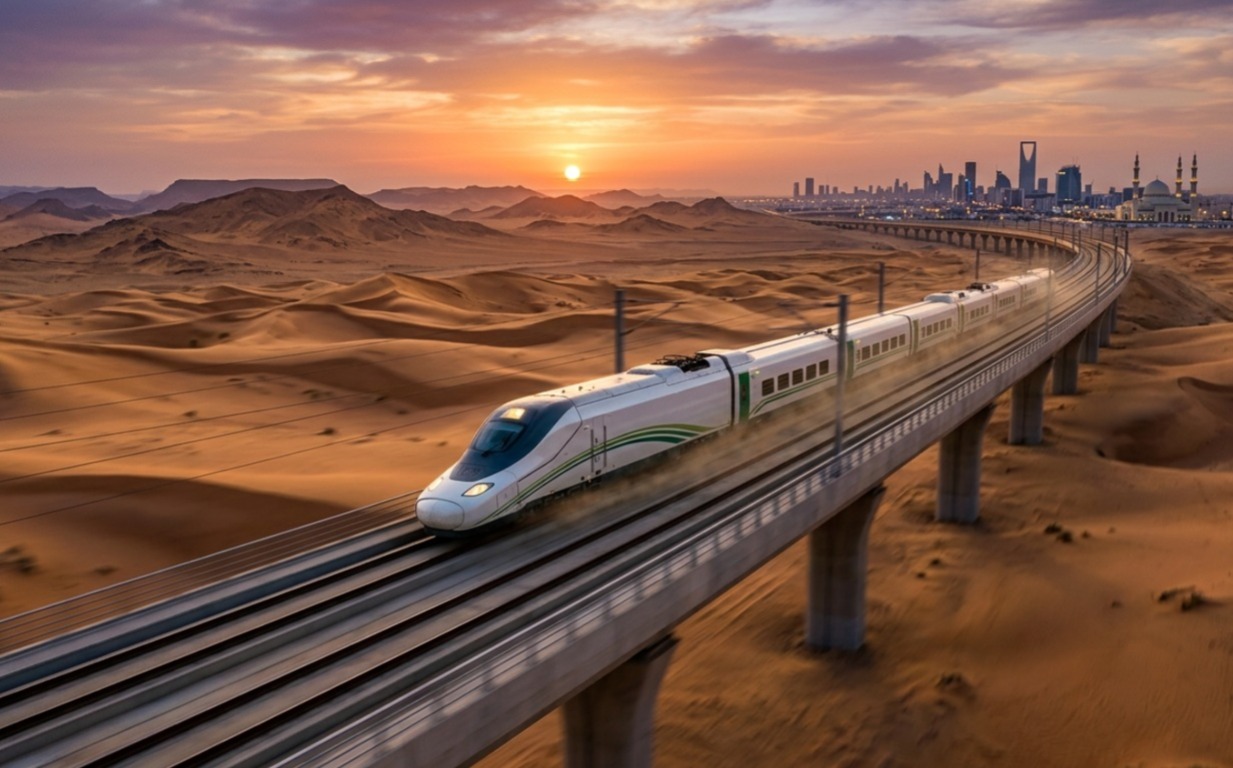
Saudi Arabia is transforming its transportation landscape with ambitious infrastructure projects, and the so-called “Desert Miracle” high-speed rail link stands as a powerful example of this progress. Designed to connect major cities across vast desert terrain, this next-generation rail system reflects the Kingdom’s commitment to speed, sustainability, and modern mobility under Saudi Vision 2030.
Project Overview
The high-speed rail network is part of Saudi Arabia’s broader effort to modernize its transportation systems and reduce reliance on road travel. It aims to link key economic, religious, and urban centers through a fast, efficient, and environmentally friendly rail system.
One of the most prominent examples of this vision is the Haramain High Speed Railway, which has already set a benchmark for rail travel in the region. The “Desert Miracle” concept builds upon such projects, expanding connectivity across longer distances and more regions.
Engineering Across Harsh Terrain
Constructing high-speed rail across desert environments presents unique challenges, including extreme temperatures, shifting الرمال, and vast open landscapes. To overcome these, the project incorporates:
- Specialized track systems designed for sand resistance
- Advanced cooling and maintenance technologies
- Elevated tracks and protective barriers in sensitive areas
- Continuous monitoring systems for safety and efficiency
These innovations make it possible to deliver reliable high-speed travel even in one of the world’s harshest climates.
Speed, Efficiency, and Connectivity
The high-speed rail system is designed to significantly reduce travel times between major cities. Key benefits include:
- Travel speeds exceeding 300 km/h
- Reduced journey times compared to road and air travel
- Seamless connections between economic hubs
- Integration with urban transport systems
This level of connectivity supports both business travel and tourism, making movement across the Kingdom faster and more convenient.
Economic and Social Impact
The development of high-speed rail plays a crucial role in Saudi Arabia’s economic diversification strategy. It contributes to:
- Increased tourism, including religious and domestic travel
- Job creation in construction, operations, and maintenance
- Improved logistics and regional connectivity
- Growth of surrounding real estate and commercial zones
By connecting cities more efficiently, the rail network helps create a more integrated and dynamic national economy.
Sustainability and Future Mobility
Rail transport is one of the most environmentally friendly modes of mass transit. The project supports sustainability by:
- Reducing carbon emissions compared to road transport
- Promoting public transportation usage
- Incorporating energy-efficient technologies
- Supporting long-term sustainable urban planning
These efforts align with Saudi Arabia’s goals of building greener and more livable cities.
A New Era of Transportation
The “Desert Miracle” high-speed rail initiative represents more than just infrastructure—it is a symbol of innovation and national progress. By mastering the challenges of desert construction and delivering world-class rail systems, Saudi Arabia is setting new standards for transportation in the region.
Conclusion
Saudi Arabia’s high-speed rail developments are redefining how people travel across the Kingdom. By combining advanced engineering, sustainability, and strategic planning, the “Desert Miracle” rail link is paving the way for a faster, more connected future.
As the Kingdom continues to expand its rail network, high-speed connectivity across the desert will stand as a testament to its vision, resilience, and commitment to innovation.