NEOM’s “The Line” Reimagined: From Futuristic City to AI Infrastructure Hub
Introduction
When Saudi Arabia first unveiled The Line, the world was captivated by its bold vision — a 170-kilometer futuristic linear city designed to transform urban living. As a flagship development within NEOM, the project promised a car-free, zero-carbon metropolis powered by advanced technology.
However, recent reports suggest the project may undergo a major strategic shift, with plans being reconsidered and parts of the development potentially repurposed for large-scale artificial intelligence data centers and digital infrastructure. This possible transformation reflects evolving priorities in Saudi Arabia’s long-term development strategy.
The Original Vision Behind The Line
Announced in 2021, The Line was designed as a revolutionary urban concept featuring two parallel mirrored skyscrapers stretching across the desert landscape.
Key features of the original concept included:
- A 170-kilometer-long linear city
- Capacity for up to 9 million residents
- No cars or traditional roads
- Ultra-high-speed transportation across the entire city in about 20 minutes
- Fully powered by renewable energy
- AI-driven urban management systems
The project quickly became one of the most talked-about developments under Saudi Vision 2030, which aims to diversify the country’s economy beyond oil.
Challenges Facing the Mega-City
Despite its ambitious vision, building a city of this scale presented enormous challenges.
1. Financial Scale
The full build-out of The Line was estimated to cost hundreds of billions — potentially trillions — of dollars, making it one of the most expensive urban developments ever attempted.
2. Engineering Complexity
Constructing a continuous mirrored structure across 170 kilometers of desert terrain requires unprecedented engineering solutions, from structural stability to transportation systems.
3. Development Timelines
Large-scale megaprojects often face delays as planners refine designs, manage logistics, and align with broader national economic priorities.
These factors have reportedly encouraged planners to reconsider aspects of the original plan.
A Possible Shift Toward AI Data Infrastructure
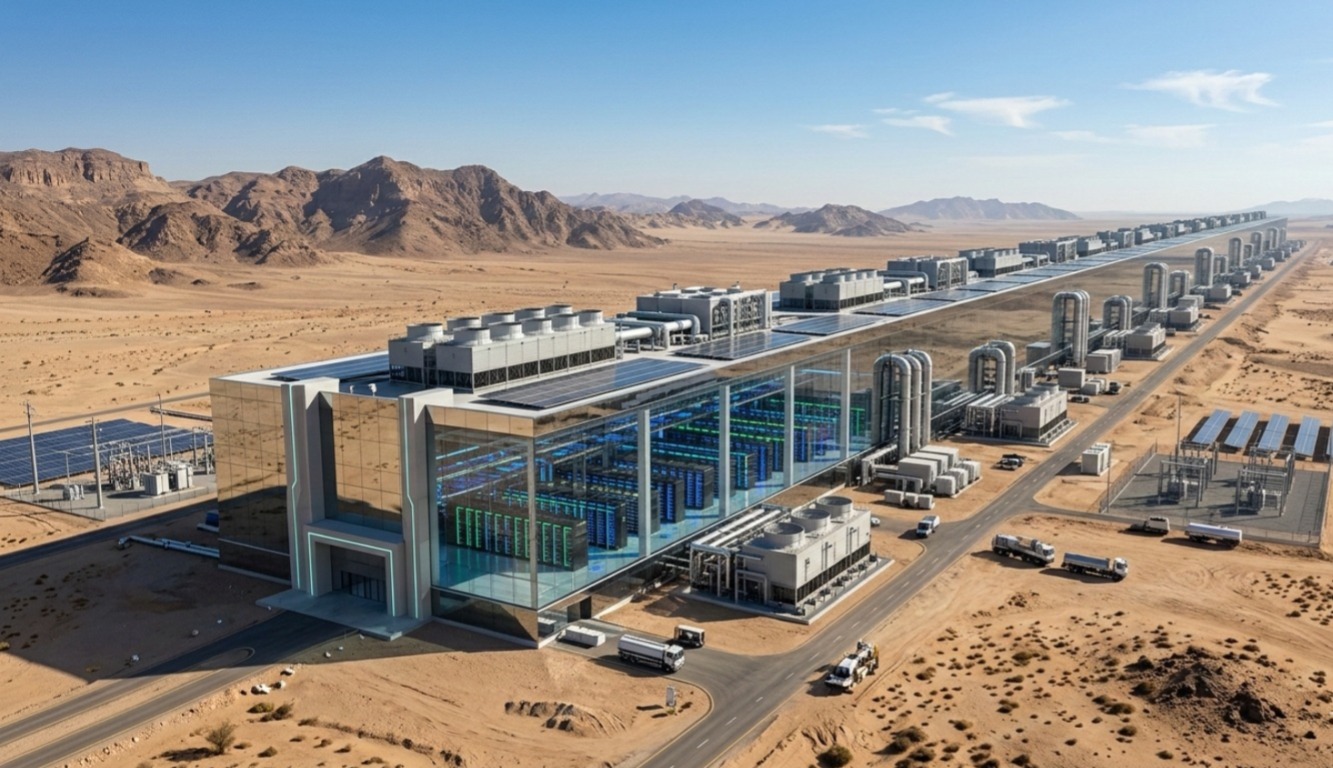
Rather than abandoning the project entirely, reports indicate that some parts of the development may be repurposed to support artificial intelligence infrastructure.
This could include:
- Massive AI data centers
- Cloud computing facilities
- High-performance computing hubs
- Digital storage infrastructure for global technology companies
Such a shift would reflect the rapid global growth of AI technologies, which require enormous computing power and energy resources.
The geographic location of NEOM could offer advantages, including access to renewable energy sources and proximity to global digital networks connecting Asia, Europe, and Africa.
Aligning With Saudi Arabia’s Technology Strategy
Saudi Arabia has been increasingly investing in technology and digital infrastructure as part of Vision 2030. Expanding AI computing capacity could strengthen the Kingdom’s position as a regional technology and innovation hub.
Potential benefits include:
- Attracting international tech companies
- Supporting AI research and development
- Creating high-skill technology jobs
- Expanding digital infrastructure for global markets
By pivoting toward AI infrastructure, Saudi Arabia could tap into one of the fastest-growing sectors of the global economy.
The Future of NEOM
Even if The Line undergoes major changes, the broader NEOM project remains active. The region is expected to include multiple developments focused on tourism, advanced industries, sustainable energy, and technology.
Urban planners suggest that the future may involve:
-
Smaller sections of The Line being built first
-
Integration of AI and smart-city technologies
-
Development of innovation districts and tech campuses
This flexible approach allows the project to adapt to changing economic and technological trends.
Conclusion
The potential transformation of The Line reflects how ambitious megaprojects often evolve over time. While the original vision of a 170-kilometer linear city captured global imagination, the possibility of turning parts of the project into an AI data infrastructure hub could position Saudi Arabia at the forefront of the digital economy.
Rather than signaling the end of the project, the redesign may represent a strategic shift toward technology-driven growth, aligning with the Kingdom’s long-term goals under Vision 2030.